READ ALL ABOUT IT:
Mustard Seed Mountain is West Virginia’s first street newspaper, bringing you stories from and for the poor, working, and misunderstood.
Dear reader,
There’s a certain kind of magic in Wheeling during the summer. The way the lush, green hills cascade around The Ohio; the way the city comes alive with outdoor music and festivals; the way the air becomes heavier and hazy yet everything feels a little lighter.
But it’s important to note that this summer hasn’t been easy for some of our neighbors. When the Valley was hit with a dangerous heatwave over the Fourth of July weekend, little to no efforts were made on the part of the city to provide cool, safe spaces for unhoused people. There is actually no city emergency plan for extreme weather for unhoused individuals.
Recently, the City of Wheeling announced the creation of a “Homeless Task Force” and, more recently, announced that Rabbi Joshua Lief would serve as chair of the committee and as one of several faith leaders. This is a very helpful lens to bring to conversations about homelessness for many reasons, especially when the stigma of being “homeless” often comes with being dehumanized for lacking one main material thing – money. But it is not money that gives human life value – or at least it shouldn’t.
In June, Mayor Denny Magruder announced the formation of a new taskforce to address the issue of homelessness in Wheeling. Magruder said the taskforce will be “guided by local clerics” and is intended to “balance compassion with accountability.” At the time of publication, the council has released little information about the makeup and specifics of the group aside from its chair – Rabbi Joshua Lief of Temple Shalom. As Wheeling’s ‘Homeless Taskforce’ takes shape, Mustard Seed Mountain reflects on the last decade of advocacy for our homeless neighbors.
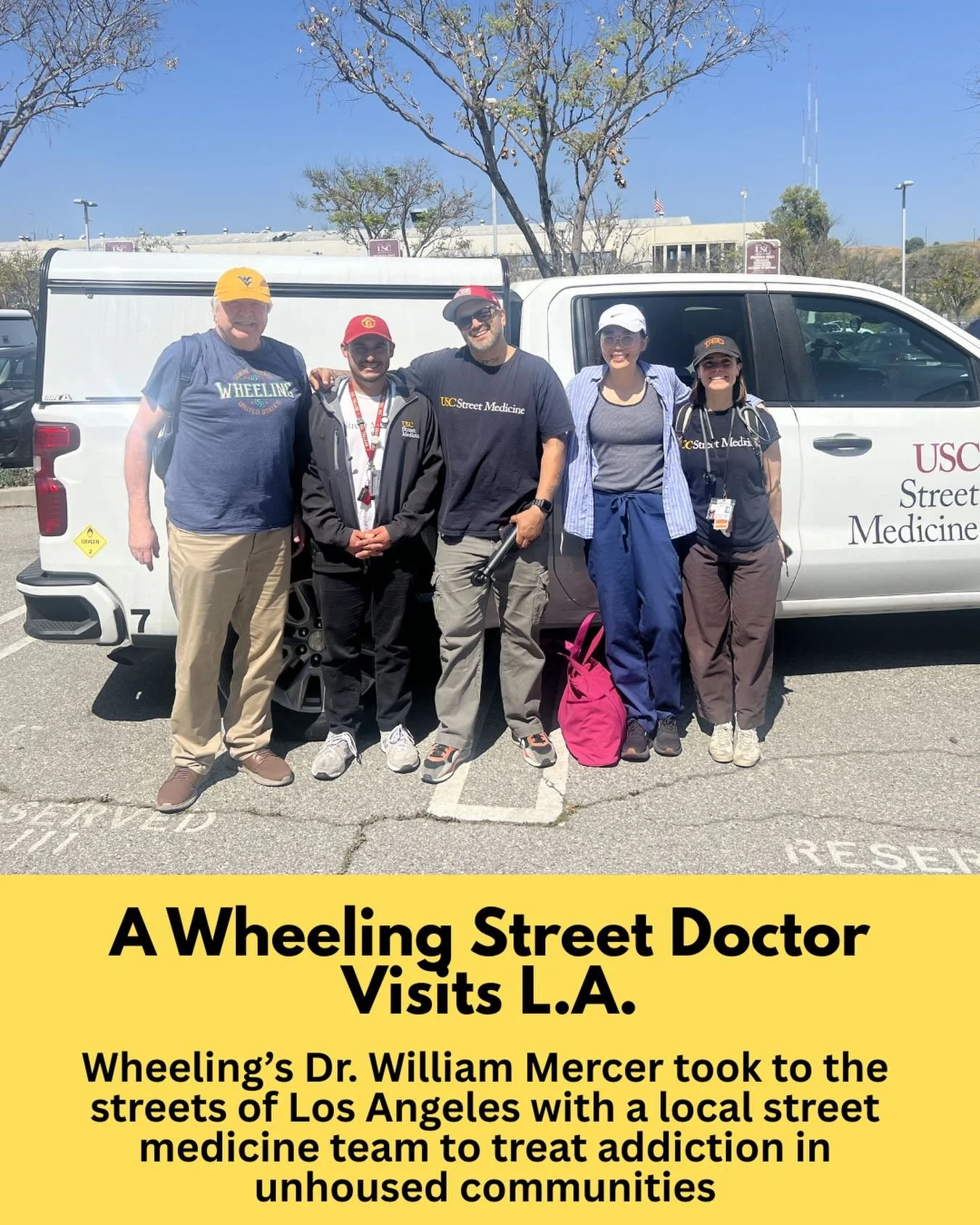
Wheeling Street Doctor William Mercer teamed up with a big-city street medicine team during a visit to Los Angeles. The trip taught him some new techniques, while affirming the groundbreaking street medicine work that Wheeling is already doing at home.
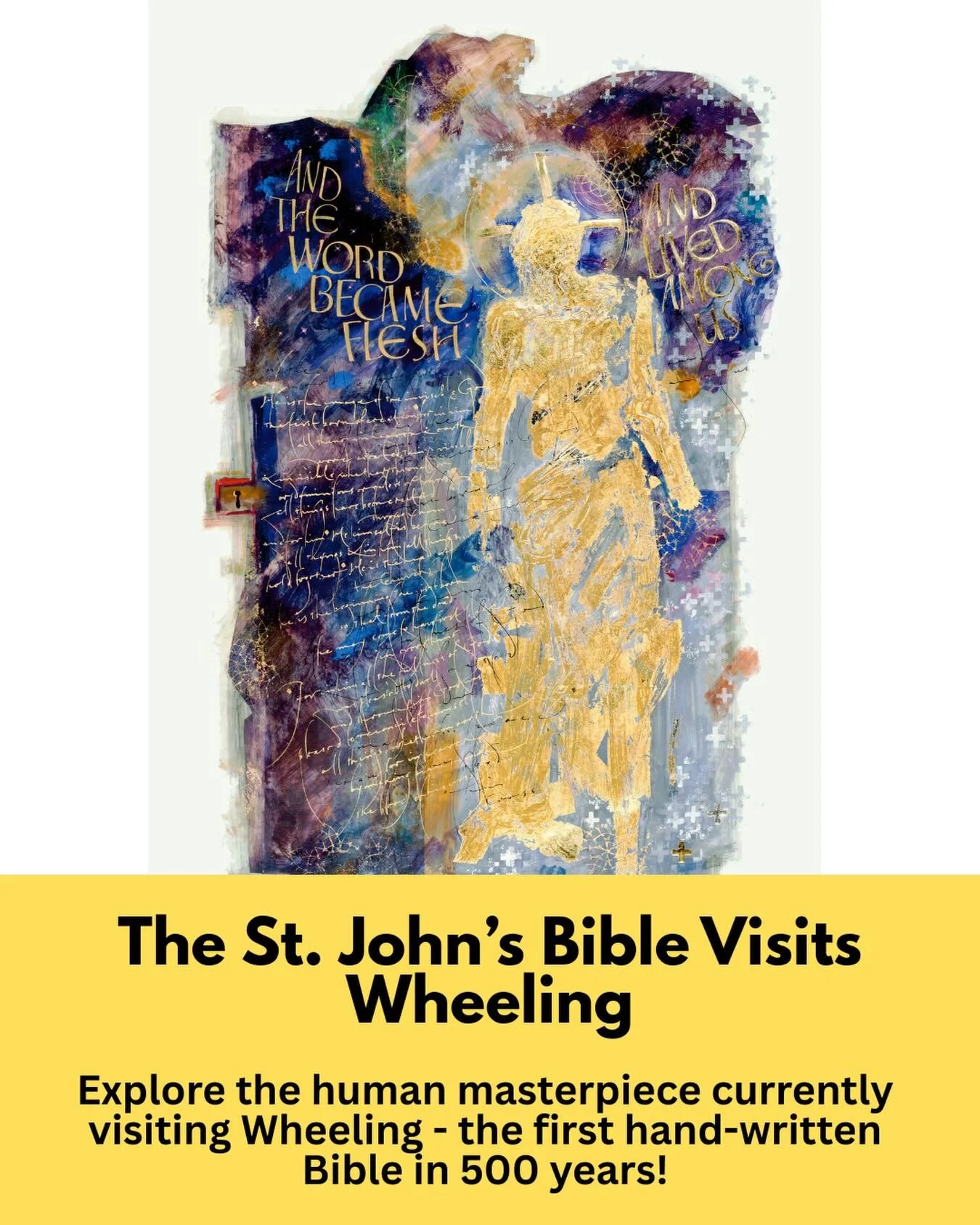
I cried when I first saw and spent time with the Saint John’s Bible. It was the resurrection illumination (the pictures that accompany the biblical text) with Jesus telling Mary Magdalene, and all of us, “don’t hold on to me...”
I’ve always heard crying at art was a thing. My mother and sister, both artists, could regularly get a few tears going on family trips to the Carnegie Museum of Art in Pittsburgh. I’m more of a crier at things like “Les Miserables,” church, and “It’s a Wonderful Life,” always “It’s a Wonderful Life.” But never art. While I like opportunities to evoke an emotional experience, I always wondered, what were they seeing in Monet, or Van Gogh that I was just missing?
So when tears started at the hand painted illumination in the Saint John’s Bible, it finally registered for me.
West Virginia is no stranger to pulling the shortest straw.
Since its inception, this state and its people have been subject to ruthless natural resource extraction, harmful legal systems, and widespread social and political manipulation. Although the state has found itself in the grip of the so-called Make America Great Again movement, there are many here who empathize with their immigrant neighbors and are working hard behind the scenes to support them.

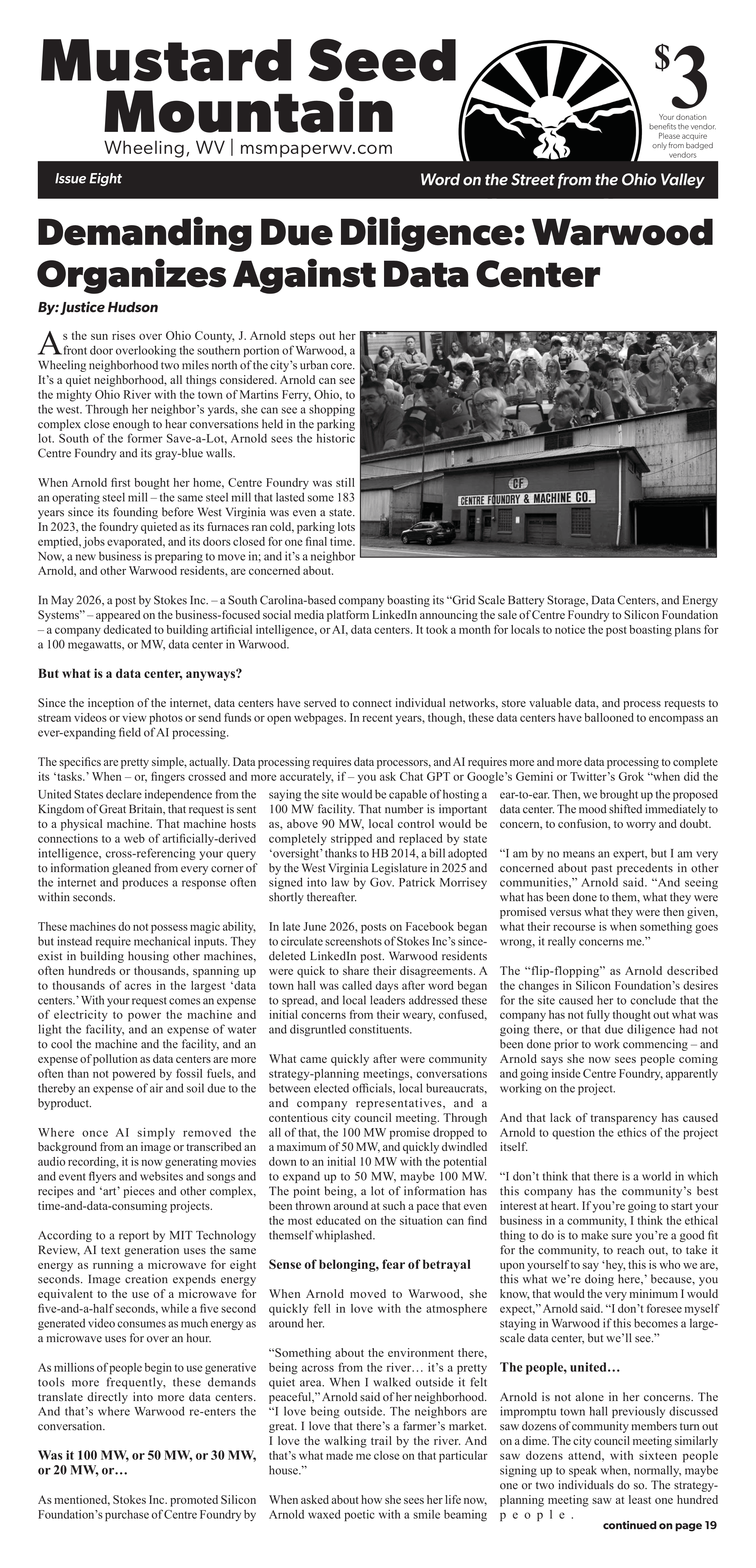
As the sun rises over Ohio County, J. Arnold steps out her front door overlooking the southern portion of Warwood, a Wheeling neighborhood two miles north of the city’s urban core. It’s a quiet neighborhood, all things considered. Arnold can see the mighty Ohio River with the town of Martins Ferry, Ohio, to the west. Through her neighbor’s yards, she can see a shopping complex close enough to hear conversations held in the parking lot. South of the former Save-a-Lot, Arnold sees the historic Centre Foundry and its gray-blue walls.
When Arnold first bought her home, Centre Foundry was still an operating steel mill – the same steel mill that lasted some 183 years since its founding before West Virginia was even a state. In 2023, the foundry quieted as its furnaces ran cold, parking lots emptied, jobs evaporated, and its doors closed for one final time. Now, a new business is preparing to move in; and it’s a neighbor Arnold, and other Warwood residents, are concerned about.